When we talk about environmental issues, we usually think of climate summits, scientific reports, and alarming headlines. Yet sometimes a visit to an exhibition can make us feel the urgency of these challenges far more deeply than dozens of articles ever could.
This is precisely the effect of After Us, a new exhibition that has opened at the Gallery of Fine Arts of Uzbekistan. Created by the artistic collective 5+1, the project explores environmental issues and human responsibility. But within minutes it becomes clear that this exhibition is not only about nature. It is about us – and about the world that will remain after we are gone.
We live in an era when environmental problems have long ceased to be news. Every day, we read about global warming, water scarcity, air pollution, and the disappearance of forests and wildlife. These stories appear in our news feeds so frequently that they gradually lose their emotional impact.
This is where art can achieve what statistics and scientific reports often cannot. It makes us feel.
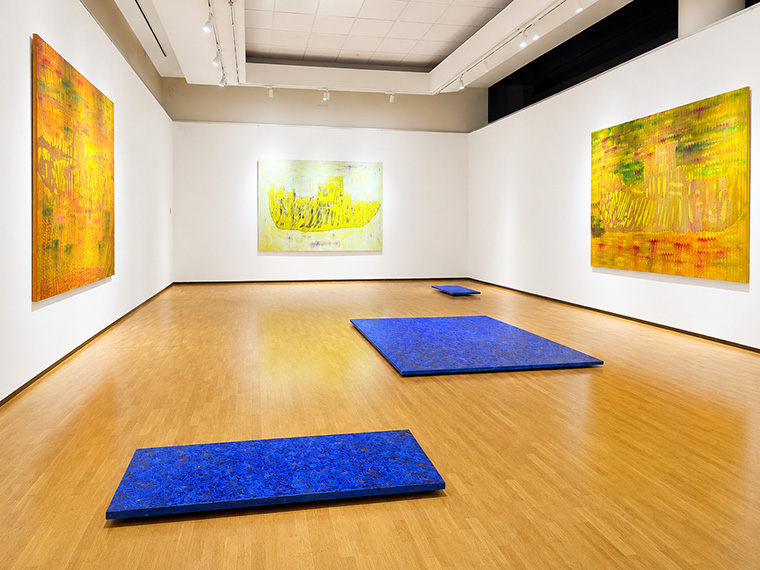
The exhibition features works by Diyor Rozikov, Sanjar Jabborov, Sharifa Sharafkhodjayeva, Doniyor Sharafkhodjayev, and Nuriddin Rasulov. The exhibition is curated by art historian Sayyora Nazarova. Each artist speaks in a distinct visual language, yet together their works form a shared conversation about the future.
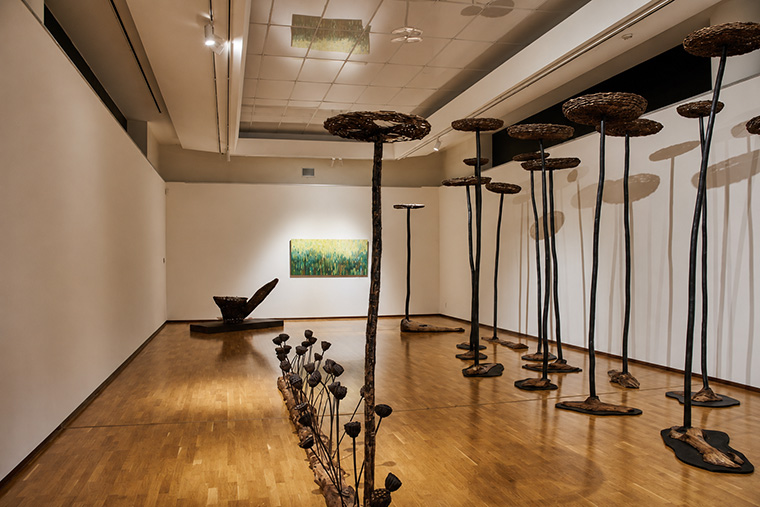
Photo: Gallery of Fine Arts of Uzbekistan.
Among the exhibition’s works, it is impossible to overlook L.O.T.O.S., a project created by Sharifa and Doniyor Sharafkhodjayev. The artists invite visitors to search for hidden signs of radiation danger. At some point, however, a deeper realization emerges: the most serious threats are often invisible. They have no color, no smell, and no sound. We can live alongside them for years without noticing their presence.
Set against this sense of destruction is the symbol of the lotus – a flower that rises toward the light through water and mud. Here, the symbol of hope becomes just as important as the warning itself.
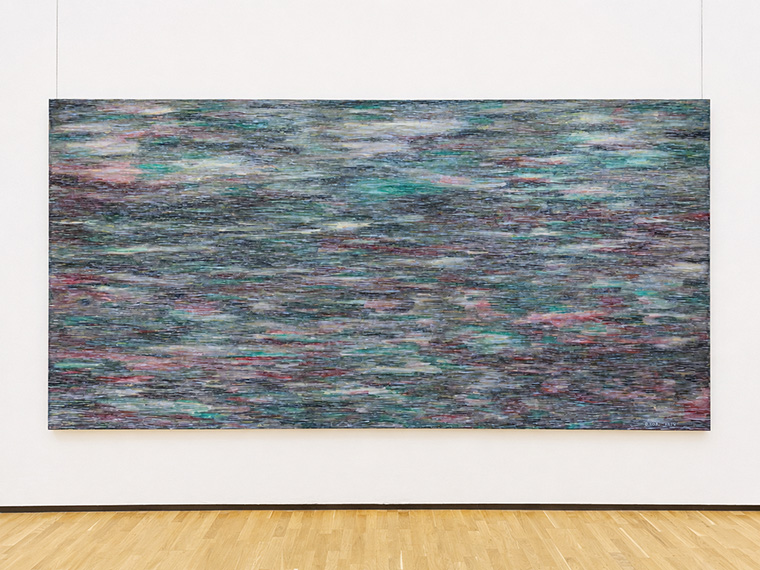
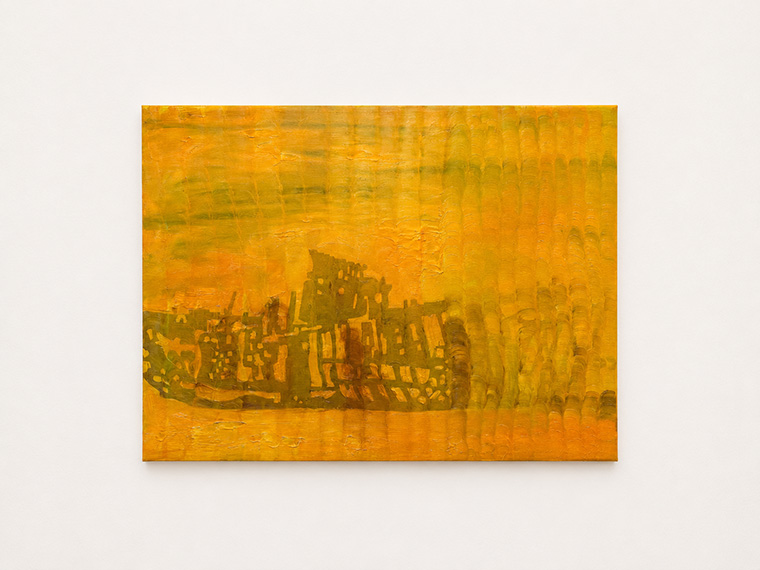
A very different response is evoked by Nuriddin Rasulov’s Desert Ships project. For the people of Uzbekistan, the story of the Aral Sea has long ceased to be an abstract environmental case study found in textbooks. It has become part of a shared memory.
The ships that once sailed its waters now stand stranded in the desert. Looking at these images, it is difficult not to reflect on the fact that environmental disasters rarely happen overnight. They are the result of countless small decisions made over many years – a drop of water considered insignificant, a tree deemed unnecessary, a river whose resources seem endless.
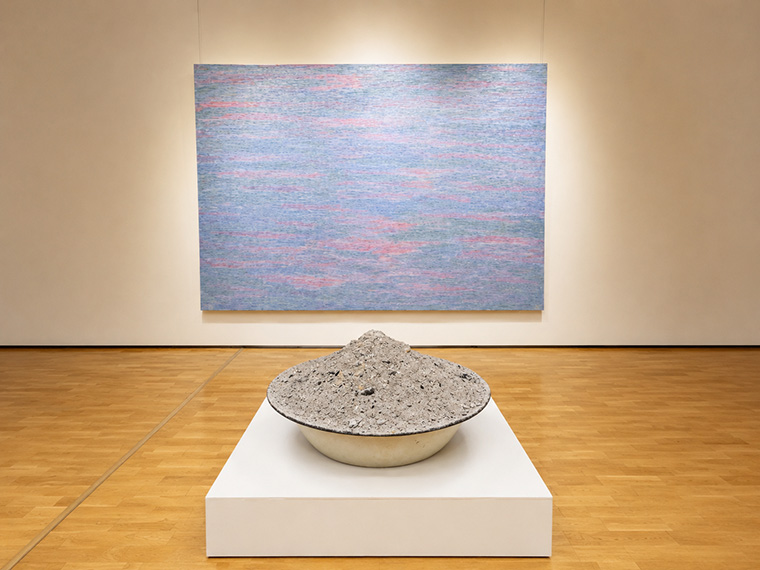
Diyor Rozikov’s Moment project serves as a reminder of just how fragile the world around us is. Through a series of paintings and an installation incorporating ash, the artist reflects on the fleeting nature of time, disappearing landscapes, and the traces human activity leaves behind – sometimes forever.
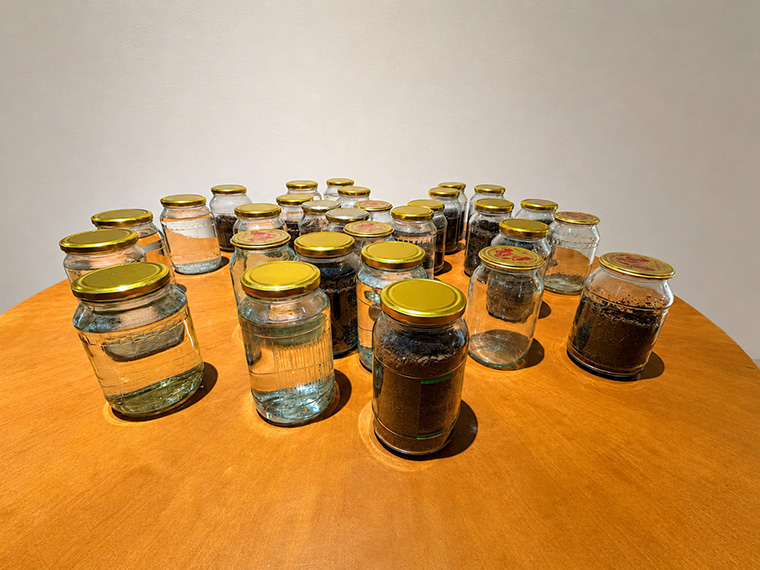
Sanjar Jabbarov also addresses the theme of preserving natural resources. His project Conservation, first presented nearly two decades ago, remains strikingly relevant today. Jars filled with water, soil, and air become symbols of an attempt to preserve what humanity long considered inexhaustible.
In the continuation of the project, Conservation. Take Two, the artist presents the world as a puzzle, reminding viewers of how fragile ecological balance can be and how difficult it is to restore once it has been disrupted.
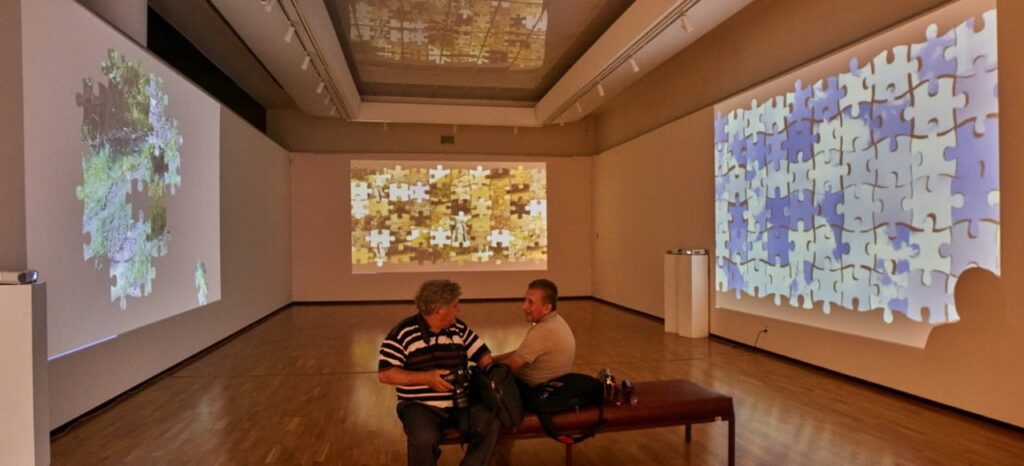
Photo: Gallery of Fine Arts of Uzbekistan.
This idea runs throughout the entire exhibition. The artists do not accuse or preach. Instead, they invite viewers to reflect on the consequences of a mindset that has led people to see themselves as masters of nature rather than as part of it.
The 5+1 creative group has been active since 2008. Over the years, its artists have repeatedly explored issues of social importance, but today their message feels particularly timely.
Because this exhibition is not only about climate change, water scarcity, or environmental pollution. It is about legacy.
What we leave behind will not be limited to photographs, books, homes, or roads. We will also leave behind the condition of our rivers and soil, the air our children will breathe, the trees we chose to preserve or cut down, and the water we managed to conserve—or carelessly wasted.
So what kind of world will we leave behind?
The exhibition will be on view at the Gallery of Fine Arts of Uzbekistan through June 20.