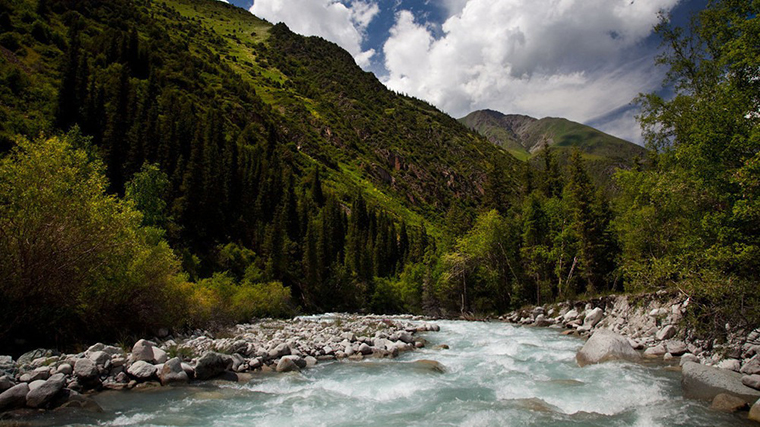
If you ask me where to begin discovering Kyrgyzstan, I would answer without hesitation: Ala-Archa National Park.
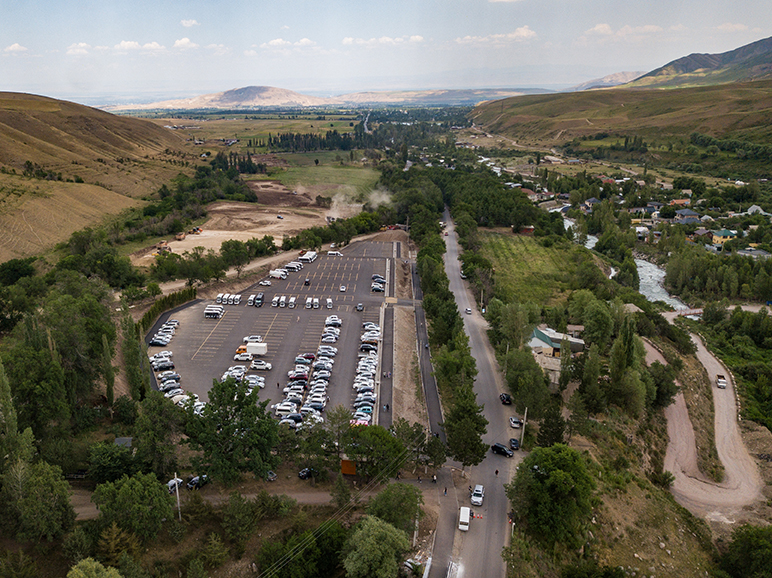
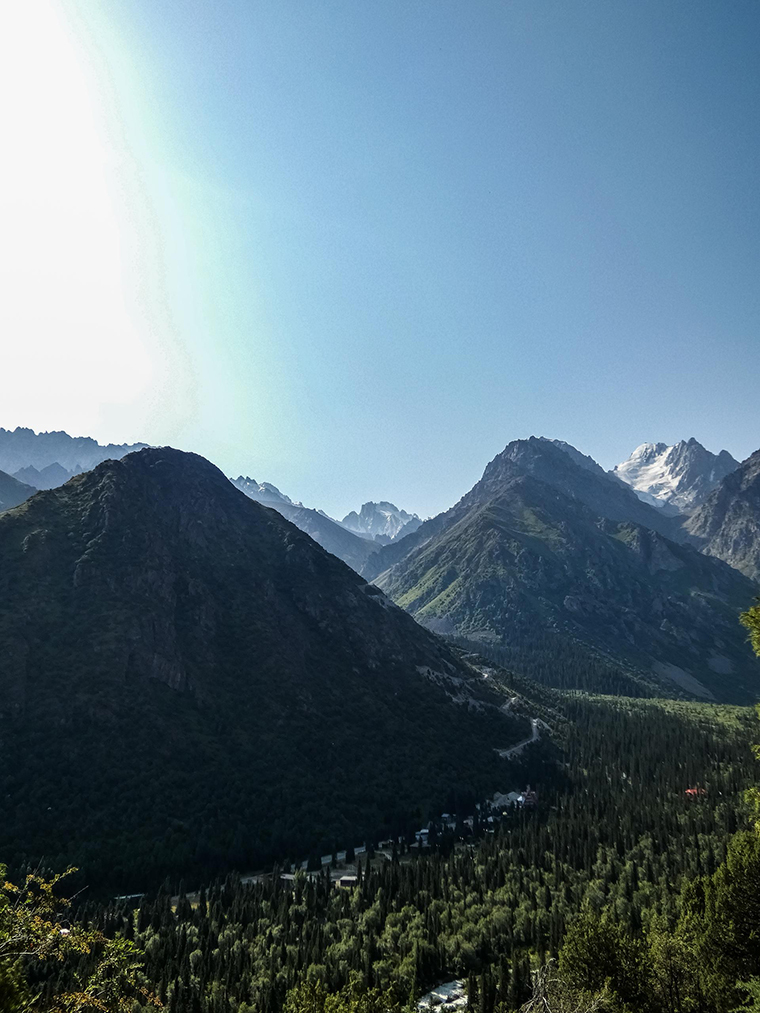
Just 41 kilometers from Bishkek, and the city seems to disappear behind you. The noise of traffic is replaced by the sound of the river, and instead of glass facades, snow-covered slopes of the Kyrgyz Ala-Too rise before you. Within an hour, you find yourself at an altitude of around 1,600 meters above sea level, in one of the country’s most famous national parks.
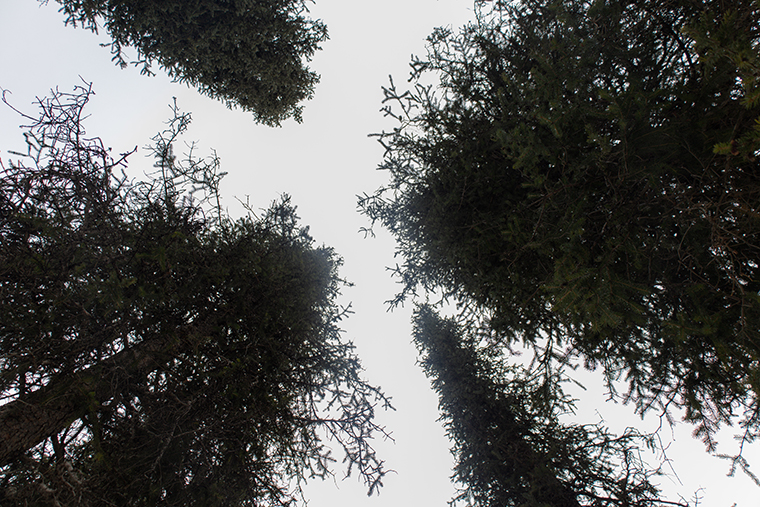
The trip to Kyrgyzstan was organized by the Department of Tourism under the Ministry of Economy and Commerce of the Kyrgyz Republic. My guide was Aisuluu Asanbekova, a staff member of the Department. She knows this gorge as if she grew up among these spruce trees.
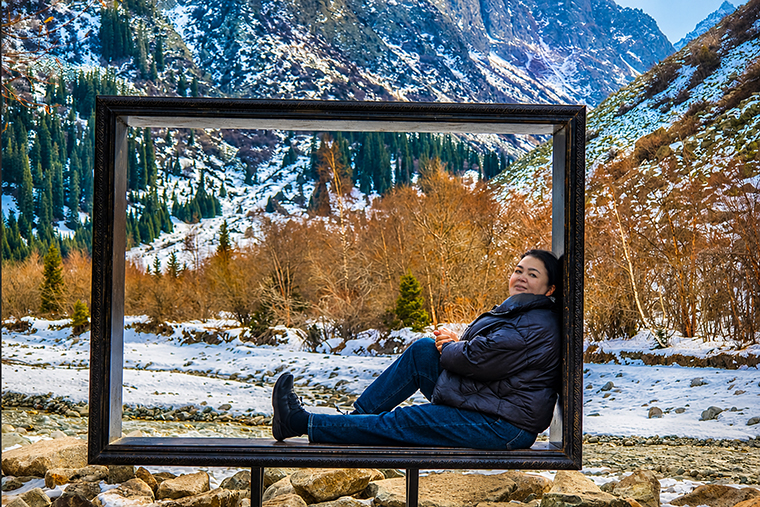
I had already visited Ala-Archa two years ago, in summer. This time, we planned to spend only an hour in the park, but the walk quietly stretched to almost five. In winter, I wanted to see a completely different Ala-Archa – austere, dramatic, and covered in snow.
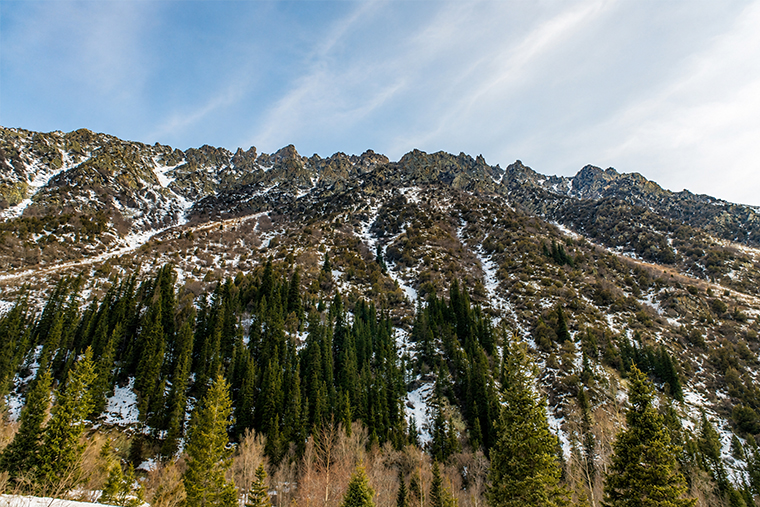
The park takes its name from the archa – the mountain juniper that covers the slopes of the gorge. The word “ala” translates as “variegated” or “multicolored,” and when you climb higher, the meaning becomes clear: dark bands of juniper alternate with rocky cliffs, alpine meadows, and snowfields.
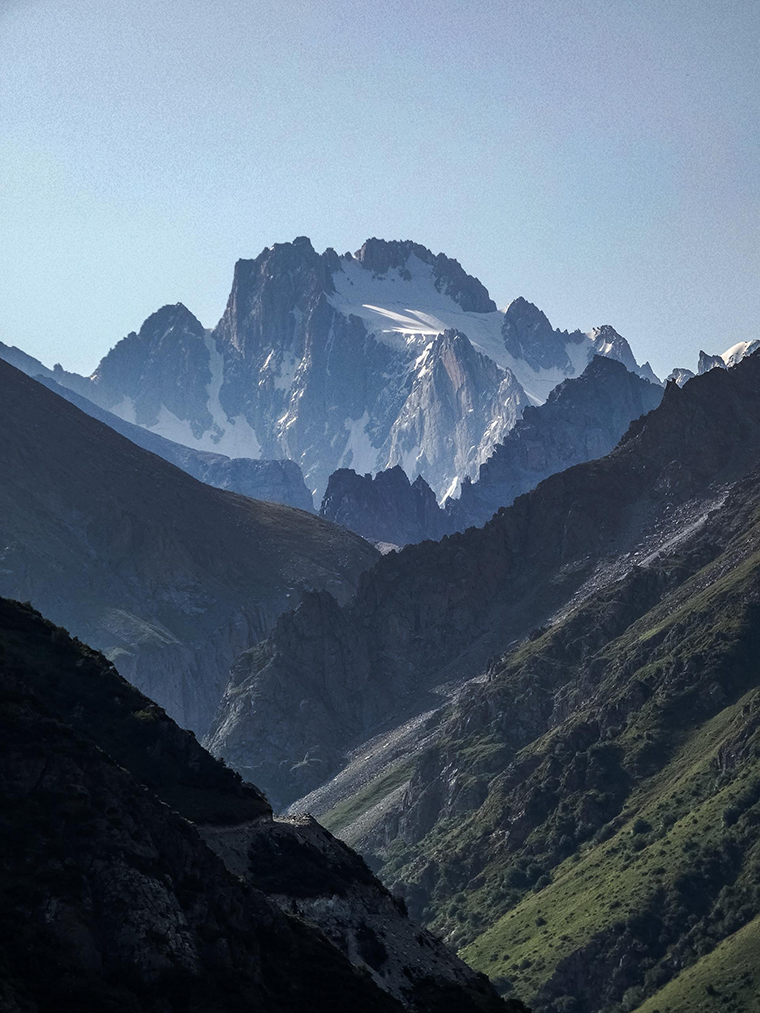
The national park covers almost 20,000 hectares, while its valley stretches more than 30 kilometers toward glaciers and peaks reaching nearly 5,000 meters in height. More than one hundred hiking routes begin here – from easy walks to challenging mountaineering ascents.
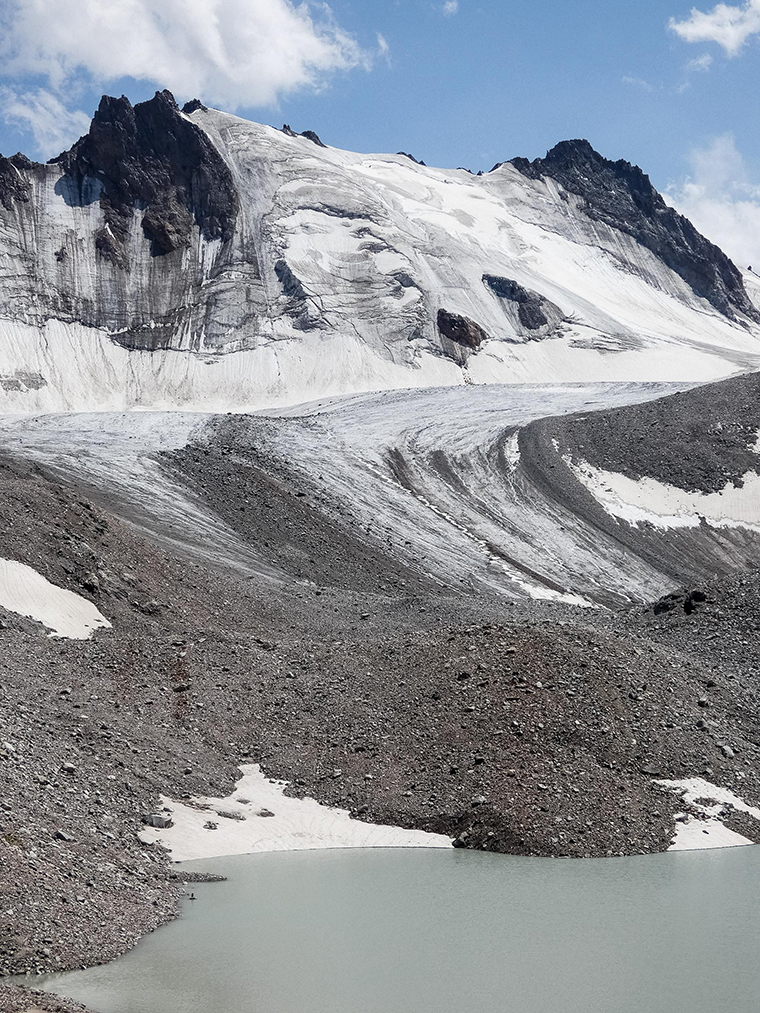
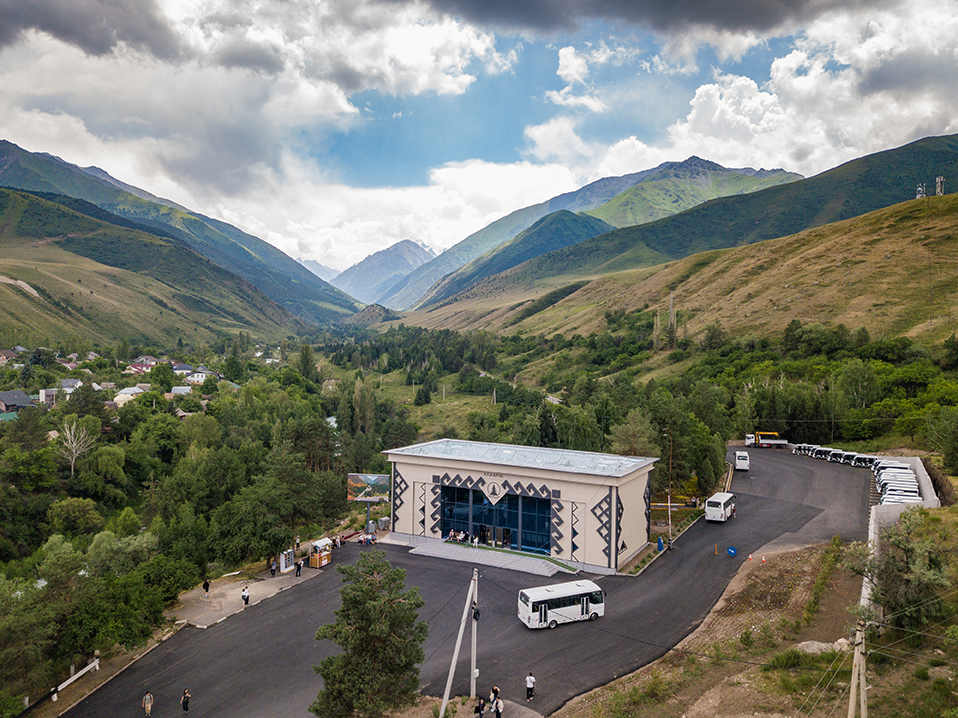
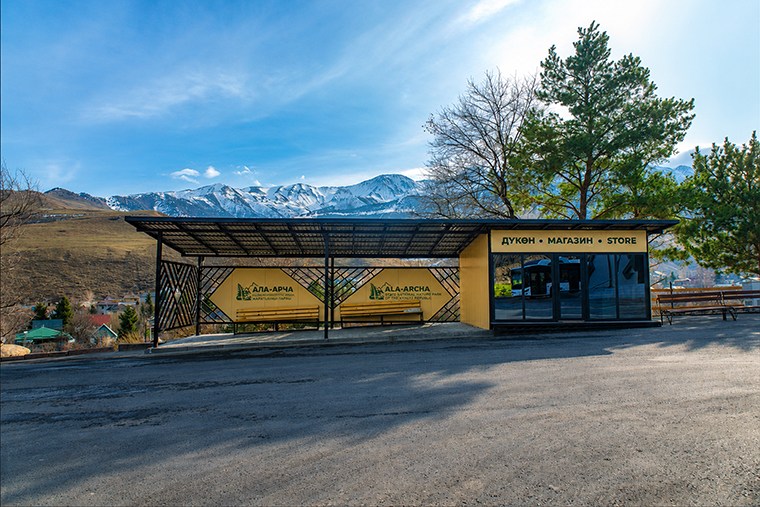
At the entrance, there is a modern visitor center, a café, and a small shop. Electric carts and electric buses take guests to the walking area. I bought a hot chocolate and we set off along the most popular trail following the Ala-Archa River.
It is an easy route, just over one kilometer long, suitable even for families with children. In summer, residents of Bishkek come here to escape the heat – the gorge is always several degrees cooler. This time, we were surrounded by the scent of coniferous trees, the sound of the glacial river, and the feeling that we were breathing completely different air. At the first trail junction, we bought a small bag of sunflower seeds.
“Now you’re going to meet the local hosts,” Aisuluu smiled.
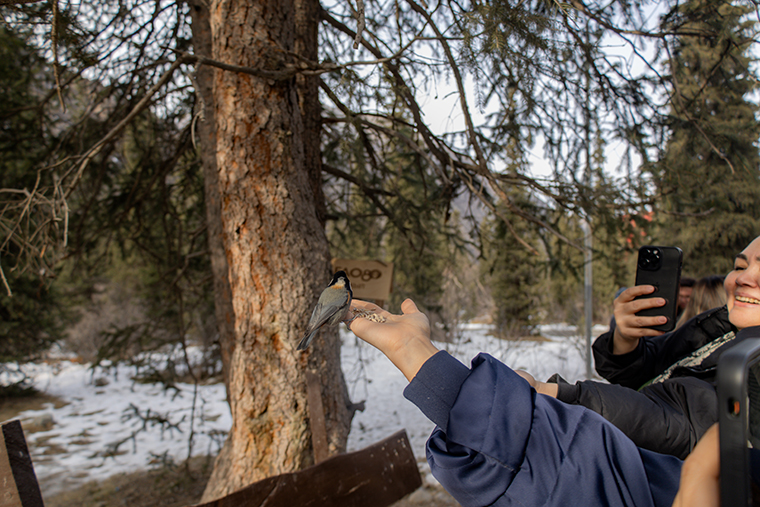
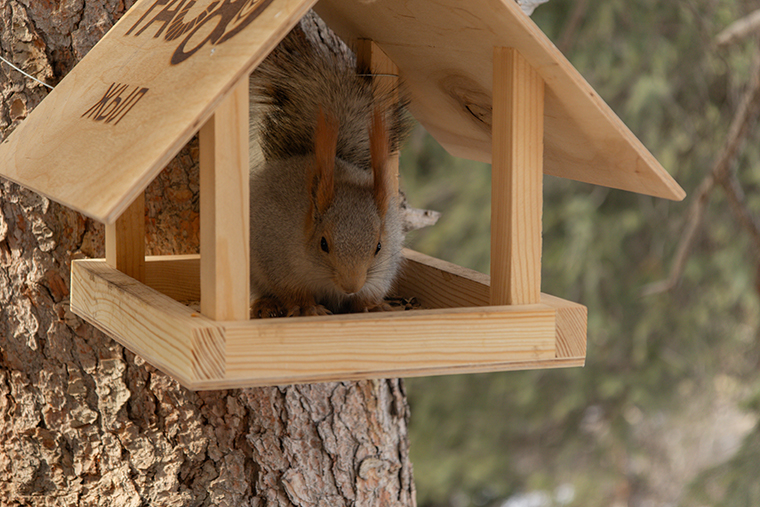
And indeed, squirrels began jumping down from the branches. Then titmice appeared, fearlessly landing right on our hands. An information board at the entrance lists other inhabitants of the park as well: the snow leopard, Siberian ibex, wild boars, marmots, wolves, foxes, and dozens of bird species.
The chance of encountering a snow leopard is almost like a miracle, but simply knowing that one of the rarest wild cats on the planet lives somewhere high in these mountains makes the walk feel special.
The river accompanies us for almost the entire way. Even in winter, it does not freeze, and in summer, during the melting of glaciers, it becomes so powerful that it can move enormous boulders.
During our visit, the first section of a new cable car was already nearing completion. At the moment, it stretches for one kilometer, but this is only the beginning of a larger project that will eventually open new panoramic views of the gorge.
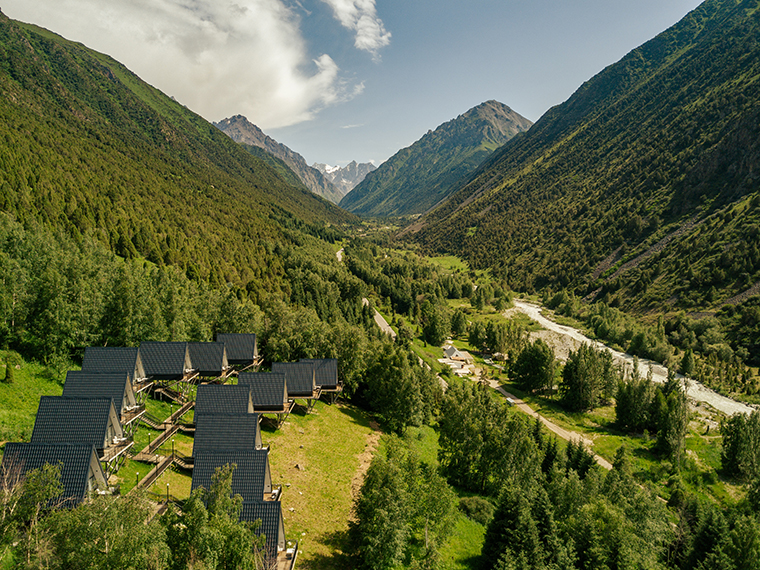
For those who want to stay longer, the park offers cozy A-frame cabins with panoramic windows, hotels, and a mountaineering shelter for those heading higher into the mountains.
We ended the day at a restaurant overlooking the valley. Outside the window, the light slowly changed, and the mountain peaks turned golden. I caught myself thinking that I had barely looked at my phone the entire day.
Perhaps that is why people return to Ala-Archa. Not for another photo. But to hear the sound of the river again, breathe in the cold Tien Shan air, and, at least for a while, remember how good it feels not to be in a hurry.
Photos provided by the Department of Tourism under the Ministry of Economy and Commerce of the Kyrgyz Republic.