Mutabar Khushvaktova did not become an environmental activist overnight. She had no master plan, no large team, no producer, and no carefully crafted public image. What she did have was something else: deep empathy, a journalist’s instinct to ask difficult questions, a mother’s concern for her child’s future, and an almost physical inability to stay silent in the face of injustice.
Today, she is known as Urikguli – an environmental blogger, activist, independent journalist, creator of social initiatives, and mother of two. Her posts can attract hundreds of thousands of views, sparking debate, support, criticism, and online hate. But before the high-profile environmental campaigns came an ordinary school life, bullying, a job as a cashier, her first social initiative, early disappointments in newsrooms, and one deeply personal promise: she would never be only a wife, only a mother, or only a daughter-in-law.
At its heart, this story is not about plastic, water, or trees. It is the story of a woman who learned to turn anxiety into action and personal pain into a conversation that matters.
“In the Village, I Was the Girl from Tashkent. In Tashkent, I Was the Girl from the Village.”
Mutabar Khushvaktova was born in Tashkent to a family originally from the village of Langar in Kamashi District, Kashkadarya Region. Her parents moved to the capital after they got married, but the family never lost its connection to their hometown. Mutabar sums up that experience in one simple sentence:
“In the village, I was the girl from Tashkent. In Tashkent, I was the girl from the village.”
“I went to an ordinary school. In the seventh grade, I experienced what today would be called bullying for the first time. My classmates constantly reminded me of where I came from. They mocked my accent, the way I spoke, and called me ‘the village girl.’ Maybe someone else would have withdrawn into themselves. But I’ve always been proud. I didn’t want to keep studying with people who humiliated me, so I told myself: I’m going to move to another class.”
“Our school had three tracks: a Russian-language class, a regular Uzbek class, and a military class. I wasn’t accepted into the Russian class because my Russian wasn’t strong enough at the time. So I decided to join the military class instead. There were only a few girls and mostly boys. Studying alongside boys taught me to deal with conflict more directly, resolve problems as they arose, and not carry them around inside me.”
“After school, my parents encouraged me to choose a ‘reliable’ profession. Teaching seemed like the right path for a young woman: a stable job, short working hours, family, children – a life that was familiar and socially approved. I enrolled in a teacher training program specializing in preschool and primary education. During my teaching practice at school, I realized that I was genuinely good at working with children and explaining complex ideas in simple ways. In a sense, I became a teacher back then, and I think I still am today.”
That ability would later become one of the defining strengths of her blog: explaining complex issues in a way that keeps people from scrolling away after the first ten seconds.
Mutabar’s father was also a journalist. It was he who encouraged her to try journalism. By then, she was already writing poetry, taking part in competitions, hosting events, contributing to the school newspaper, attending academic Olympiads, and joining extracurricular clubs. She wanted to be everywhere.
“Wherever there was an opportunity, I was there,” she says. “I entered every competition I could, including the Zulfiya State Prize, which I applied for three times. After my third rejection, I realized it was time to move on.”
“I didn’t get into university on my first attempt. Back then, in many families, failing to get into university was seen as almost a disaster. I felt ashamed in front of my parents. So I made a decision: I would spend a year working and preparing to apply again.”
“I got a job as a cashier and also worked in food service. At first, I even thought, Why do I need university if I’m already earning money? I could work, live a quiet life, and eventually get married. But after a few months, the illusion disappeared. I saw how rudely people treated those who served them: ‘Where’s my napkin?’ ‘Give me my food.’ That’s when I realized: no, I don’t want to spend my life like this.”
“I opened my textbooks again. I studied before work, after work, and during every break I had. Eventually, I was admitted to the Uzbekistan State University of World Languages. I was the very last person on the list of accepted students. I remember having just one thought: ‘Thank You, God.’”
“While I was at university, I interned at television stations and newspapers, experimented with different formats, and gradually realized that investigative journalism interested me the most. But even before journalism became my profession, public service had already become part of my life.”
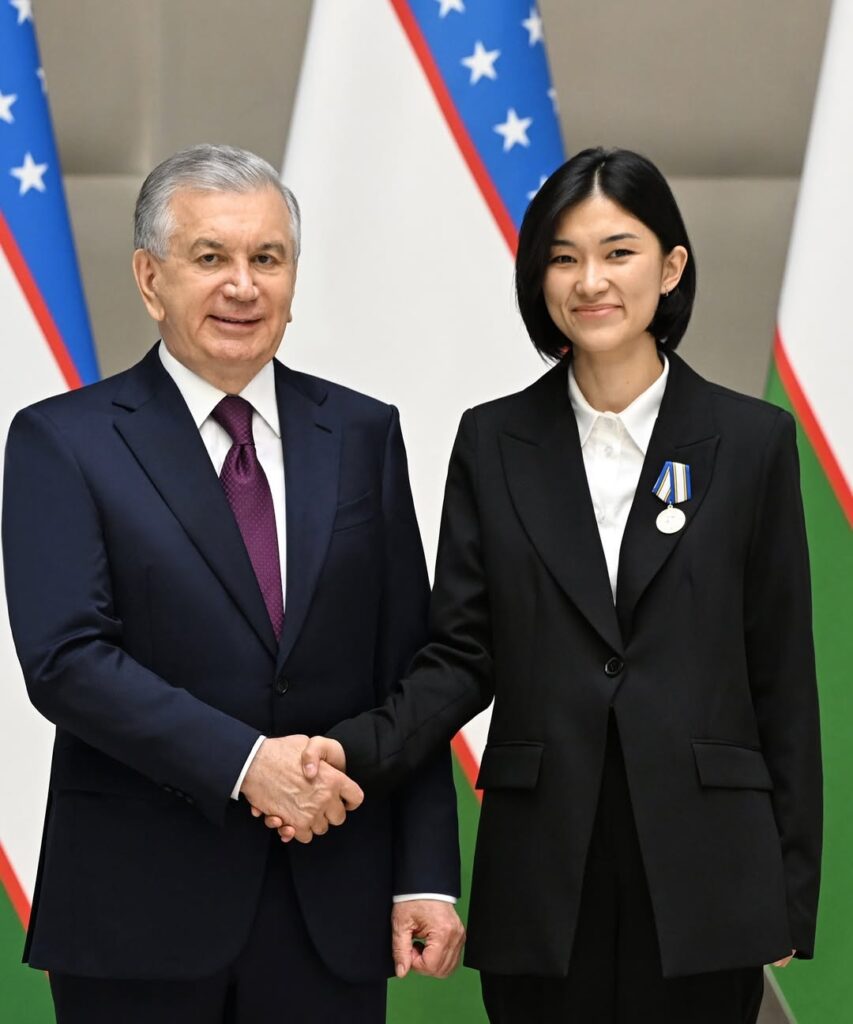
“Bakht Ulash”: Her First Experience of Public Action
Mutabar’s first social initiative was called Bakht Ulash – “Sharing Happiness.” It wasn’t born in an office, at a grant meeting, or during a strategy session. It was born at a bus stop.
“One winter morning in 2017, I was standing at a bus stop when I noticed a municipal street cleaner. It was bitterly cold, the kind of cold that goes straight to your bones. She was sweeping the street with her bare hands, without gloves. I remember thinking: If I had a cup of hot tea with me right now, I’d definitely offer it to her. That simple thought became the beginning of a social initiative.”
“I created accounts on Telegram and Instagram, posted an announcement, and invited anyone who wanted to join us in taking thermoses of hot tea onto the streets. We raised about 200,000 Uzbek soums, rented large thermoses, and bought bread rolls. The first time, around a hundred volunteers went out to serve hot tea and rolls to municipal street cleaners.”
“For me, it was the first real proof that a small idea could grow into collective action. News websites began covering the initiative. Later, cafés and restaurants joined in as well, offering hot tea and food to municipal street cleaners.”
“But Bakht Ulash did not remain a one-time campaign. Over time, it grew into something much bigger. Together with other students, we began visiting children in the oncology hospital. We didn’t bring large donations—we brought our time and attention. We played games, drew pictures, talked with the children, and organized small activities. For them, it was a chance to step outside the world of treatment—a space where they could be seen as children, not just as patients.”
Later, Mutabar became interested in Muruvvat care homes. She wanted to understand who ended up there, why people were admitted, and how a single fight or injury could permanently change someone’s life. The experience left a deep impression on her. After that, she began speaking to children and teenagers about resolving conflicts without violence, explaining that a moment of anger can have lifelong consequences.
“Charity opened my eyes,” she says. “I realized just how much pain there is in the world. And sometimes it doesn’t take much to change something—or at least to make someone else’s day a little less difficult.”
Every year before New Year’s, Mutabar continues the initiative for municipal street cleaners. Over time, hot tea and bread rolls have been replaced by food parcels, warm hats, scarves, gloves, thermoses, and lunch containers. But the idea has remained the same: to see the people the city so often overlooks.

Her First Social Video and a Lesson in Authorship
As she worked alongside municipal street cleaners, Mutabar began to notice not only acts of kindness but also deeper systemic problems. Many of them had nowhere to eat a meal, change their clothes, or use a restroom during their shifts. They were forced to ask cafés, shops, and pharmacies for permission. Some even tried to drink less water just to avoid having to look for a toilet while working. To someone who has never thought about it, these may seem like minor inconveniences. For them, they are daily humiliations.
“One day, a woman hid her bag containing a change of clothes and her advance pay inside a fir tree. When she came back, it was gone. Inside the bag were 400,000 soums—money she had planned to use to buy food for the month. She cried like a child. As I watched her, I realized that most people simply have no idea how those who clean our streets every day actually live.”
“That was when I filmed my first social-impact video. I went out with a thermos and spoke with municipal street cleaners, asking simple questions: What time do you start work? What time do you finish? Are you cold? What do you eat during the day? The power of the video was in those ordinary questions. They gave people back their dignity by reminding viewers that these workers were individuals, not part of the background.”
“At first, only a handful of people watched the video. So I took it to Kun.uz and offered it to the editorial team. They liked it and offered me a job. For a university student, it was a huge opportunity: a position at one of the country’s leading news websites, with a contract and a salary. But the story turned out to be more complicated than that.”
In the published version, the Bakht Ulash logos and references were removed. The story appeared under the newsroom’s name, and the initiative’s original creator was effectively erased. The publication sparked a major public response: people began supporting municipal street cleaners, and their wages were eventually increased. I was happy about the outcome, but later I realized that I had given away my authorship.
I didn’t stay at the newsroom for long. My stories focused on social issues: women working as day laborers, passengers on public buses, reckless bus racing, and the everyday realities of city life that are often overlooked. Then I began to feel the editorial team’s attitude toward me growing colder. My messages went unanswered, meetings were avoided, and eventually I was told that I no longer needed to write for them.
I left newsroom journalism deeply disappointed, but I did not walk away from the public conversation. Instead, I continued telling these stories through my own blog.
How She Became a Recognizable Voice
Long before her high-profile environmental campaigns, Mutabar had already become known through her social initiatives, short videos, and her ability to turn complex issues into powerful visual stories. One of her most memorable actions was walking through the city dressed in plastic bags. It wasn’t simply an Instagram stunt or a creative performance. It was a way of making the problem of plastic pollution impossible to ignore.
In her hands, plastic stopped being an abstract subject confined to reports and statistics. It became a figure walking through the streets, looking people in the eye and asking a simple question: What are we leaving behind?
After leaving the newsroom, she made a short documentary titled Suv (Water), about water and natural springs in Kashkadarya. While attending a wedding in her family’s home region, she watched people collecting water from a spring that was gradually drying up. She filmed a few scenes, joined the dancing, then picked up her camera again. When she returned to Tashkent, she published the film. It quickly gained attention on her Instagram account.
After that, Kun.uz reached out to her again with another job offer. This time, she read the message but never replied. It wasn’t an act of pride or resentment. For her, it marked the moment she reclaimed her own voice. She realized she no longer needed someone else’s platform to be heard—she could speak for herself.
Gradually, Mutabar stopped being simply the creator of social initiatives. She became an independent public voice—a storyteller who no longer waited for a newsroom’s permission to raise an important issue.



Photo: Paprika_ph_
“I Will Never Be Just a Wife and a Mother”
Mutabar met her future husband through Bakht Ulash. He came across her social initiatives on social media. They lived far apart—he was from Khorezm, while she was in Tashkent. Curious about who was behind such large-scale projects, he discovered that they were being led by a young woman and decided to message her. They started talking on Telegram. On the second day, he told her, “I’m going to marry you.” Mutabar recalls the moment with a smile: “What a determined man.”
By the time they finally met in person, Bakht Ulash had already become a well-known initiative. He saw how she worked, how deeply she cared about every project, and how much of herself she devoted to social causes.
“I told him one thing right from the start: ‘You need to understand this. I will never be just a wife. And I won’t be just a mother either. Those roles alone are not enough for me. I will always find meaningful work to do. If one project ends, there will be another, and then another. I will always be involved in society. I will always have social initiatives. Are you ready to support that?’
For me, that was non-negotiable. If we couldn’t find common ground—if he couldn’t accept me as I am—there was no point in taking the relationship any further.”
“He still supports me today. Even when I take on difficult, sensitive, or controversial topics, he has never told me, ‘Be quiet,’ ‘Don’t write about it,’ ‘Don’t call them,’ or ‘Don’t speak out.’ On the contrary, as a lawyer, he often helps me look at a situation from a different perspective. Before publishing something important, I frequently ask for his opinion.
But my toughest critic has always been myself. I’m an extremely self-critical person.”
We got married in 2018. Our daughter was born in 2019, and later our son joined the family. For me, marriage and motherhood were never the end of my journey. They became part of it—and my greatest source of strength.
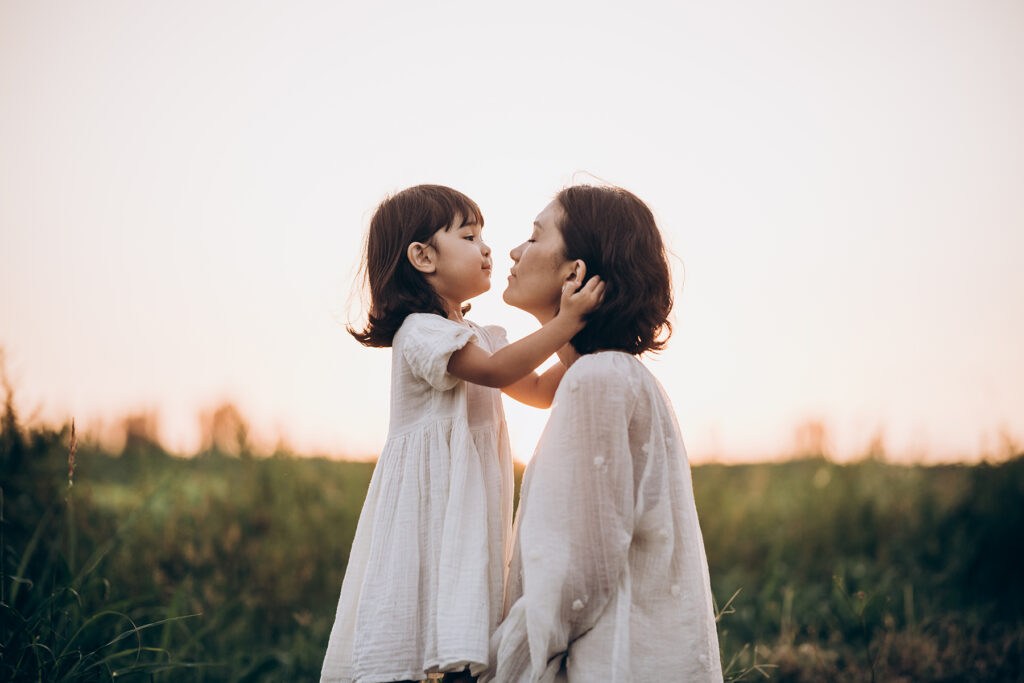
Motherhood Led Me to Environmental Activism
When asked how journalism led her to environmental activism, Mutabar answers without hesitation:
“It wasn’t journalism. It was motherhood that led me to environmentalism.”
“I’ve always been an empathetic person. I felt everything deeply and took everything to heart. But when my daughter was born, I would look at her, and she would look back at me, and suddenly the world seemed dangerous. For the first time, I truly understood that there were so many things I simply couldn’t control.”
“I can provide my child with good clothes, an education, and all the love and care she needs. But the air she breathes doesn’t depend on me alone. The water she will drink doesn’t depend on me alone. The city she will grow up in doesn’t depend only on our family.
The scale of environmental problems troubled me so deeply that I could hardly eat or sleep. When you become a parent, you feel responsible for your child’s life. But you quickly realize that this responsibility is not entirely in your hands.”
“I can save water, but someone else washes their car with drinking water. And if one day water becomes scarce, both of us will suffer. I did my part—so why should I suffer too?
Questions like these drove me to look for answers. I wanted to understand why environmental problems arise, what solutions already exist, and what scientists around the world are doing to address them. But there was almost no accessible information in Uzbek. What I found were old research papers, official documents, and dense academic texts that most people would never read.”
“Then I asked myself: if this knowledge isn’t available in schools, kindergartens, public transport, on the radio, or on television, where is an ordinary person supposed to find it? The answer was obvious: social media. That’s where people already were.
That’s how my environmental blog began. Not as a way to become famous, but as an attempt to explain complex issues in simple language. Not only through writing, but through photos, videos, new formats, and social media trends. My goal wasn’t simply to publish information. My goal was to make people watch until the end. Because if someone watches until the end, they gain knowledge. And knowledge can become a habit, inspire support for an initiative, or lead to more conscious choices.”
“I edited my first video at night while breastfeeding my baby. My daughter was only three months old. I told myself, ‘If this video gets 100 likes, I’ll keep going.’ By the next morning, it had 120. So I did.”
“The people who supported me the most weren’t celebrities, major influencers, or journalists. They were ordinary people. They were the ones who shared my videos, boosted their reach, discussed them, and wrote back to me. That’s why I don’t believe it when people say that society is indifferent. It isn’t. People do care. You just have to present information in a way that makes them want to watch until the end.”

High-Profile Environmental Campaigns
Over time, Mutabar became closely associated with environmental issues. She began speaking about plastic, water, waste, deforestation, air quality, the Chirchiq River, Charvak, public hearings, and environmental impact assessments. But her activism was never built on slogans.
She constantly emphasizes that it is not enough to simply go out and say, “Plastic is bad, we should ban it.” You need to understand why it is harmful, in which situations it is necessary, why humanity cannot completely eliminate it, what alternatives exist, and where greenwashing begins. It requires reading research, comparing reports, fact-checking information, and finding experts.
This approach became especially evident during the Sea Breeze and Charvak case. It was not the moment when Mutabar first became known, but it became one of the most difficult and widely discussed cases of her activism.
When videos and rumors about a large-scale project at Charvak first began appearing, Mutabar started looking for experts who could comment on the potential environmental consequences. Many people said it was just publicity and that nothing serious would happen. A few months later, the project was officially confirmed.
She then began to study the issue more deeply. She looked for experts abroad because, according to her, many specialists inside the country were afraid to speak publicly. Professors, researchers, and academics often avoided commenting. Some did not respond, some stopped answering calls, and some simply disappeared.
Eventually, she found Yulduz Abdullaeva, a biologist and Doctor of Science based in Germany, as well as other specialists. She gathered opinions from activists and experts and prepared a short video. It received more than one million views.
But according to Mutabar, there was almost no response from government institutions. She tagged the relevant authorities, shared stories, and posted messages with the hashtag #SaveCharvak. A tense atmosphere began to grow around the issue: followers said they were summoned to local police departments after reposting the content; some bloggers said they were invited for conversations. Mutabar herself did not face any official accusations, but she felt a sense of pressure surrounding the discussion.
A separate episode was the trip of some Uzbek influencers and journalists to an open hearing in Baku. According to Mutabar, participants were offered paid flights and accommodation, and the project was presented to them there. She declined the invitation. Her reasoning was almost everyday, but very precise: if someone has been treated to tea and plov, it becomes harder for them to argue afterward.
Later, the Tashkent regional administration organized a meeting in the Bostanlyk district. It was scheduled for Friday at 10 a.m., during winter, far from Tashkent, and without organized transportation. At the time, Mutabar had a small child and was unable to attend. However, other activists still made the journey and raised their questions.
When information emerged that the environmental assessment for the project had been approved back in February but only published in May, Mutabar and the experts raised new questions. They reviewed the document together with a lawyer and specialists. In their view, the assessment appeared inconsistent and raised concerns about the methodology used.
For Mutabar, the Charvak story became more than just an environmental case. It became an example of how difficult it can be for society to receive answers from the system. How hard it is to find experts willing to speak publicly. And how quickly the public narrative can shift when a project involves influential names, money, and powerful interests.
The Price of Publicity
The Price of Publicity
Publicity gave Mutabar an audience, but it also took away part of her peace. Hate, bullying, criticism, and attempts to catch her making a mistake all became part of her life.
At one point, after a wave of bullying on Twitter, she deleted her account and thought that she no longer wanted to spend her energy on blogging.
“I told myself: yes, I chose a public path myself, and no one is obligated to support me. But that doesn’t mean people have the right to harass me.”
For a while, I stepped away from Instagram. Then my husband and I went travelling around Uzbekistan. In Samarkand, I met a person who had turned his home into a second-hand shop selling chapan robes and who spoke with tourists with genuine love for what he did. I wanted to make a video about him. That was how I began to return.
In Bukhara, I met young scientists who, despite low salaries, teach biology and then work in poor laboratory conditions on plants that can purify water. In Nukus, I met a man who creates everyday items from plastic bottles and waste: brooms, hangers, covers, and household accessories. These people helped me find my sense of purpose again.
I realized that there are many people who do bad things, but there are even more people who are good, talented, kind, and grounded. Those people brought back my sense of purpose. That is why I returned.
But there is a price that turned out to be harder for me than hate. It is my children.
Publicity almost does not affect my husband and me. Yes, people may take photos of me, discuss me nearby, or recognize me in public places. But now people recognize my daughter too. They call her by name, say hello to her, may touch her, or try to give her something.
“One day, my daughter asked for a chocolate bar in a shop, and I said no. A follower who recognized us simply took a chocolate bar and gave it to my child without asking my permission. For her, it was a gesture of kindness and respect. For me, it was a violation of boundaries.
In moments like this, I feel anxious: a child may start perceiving strangers as familiar people because they know her name, her age, and who her mother is. Even though I try to show my daughter rarely and almost never show my son, people still know too much. That is what scares me the most.”
Why Children Became Her New Audience
After Sea Breeze and other difficult topics, Mutabar became deeply disappointed in adults and in the system. She admits that changing adults is difficult. That is why she is increasingly thinking about creating content for children.
For her, children are not just a decorative phrase like “our future.” They are a real audience that needs to be spoken to today. The world is constantly offering children content: songs, trends, videos, and images that parents may not always want to see in their children’s lives. But often there are no alternatives.
Mutabar wants to create modern children’s content: understandable, kind, environmentally conscious, and spoken in the language of children. She is experimenting with writing, looking for experts, reading Uzbek and English children’s literature, and thinking about different formats – music, videos, YouTube, and documentary films.
This direction is important to her, but it is also slow and demanding because she finances much of it herself. Yet the logic remains the same as at the very beginning of her journey: if the necessary content does not exist, it has to be created.

Final: “A Lot Depends on Women”
When asked what she would say to women who believe that nothing depends on them, Mutabar answers without hesitation: a lot depends on them. Maybe even everything. But first, you have to allow yourself to think differently.
“It is not easy for me either. Before every publication, I ask myself: Do I have enough facts? Do I have the right to speak? Will someone say that I am not smart enough? After unsuccessful presentations, I can criticize myself for years. My inner critic is often stronger than external criticism.”
“But today I increasingly look at this through the eyes of children. If a woman constantly tells herself, ‘I’m not smart enough,’ her daughter may one day start telling herself the same thing. If a mother does not know how to respect her own boundaries, it will be harder for a child to learn to respect theirs.”
“Not all women immediately know how to live for themselves. It is something that is difficult to reach. But you can start at least with the thought of a child – your own child or the inner child within yourself. Imagine yourself as a little girl: vulnerable, unprotected, not yet broken by other people’s judgments. And try to speak to yourself the way you would speak to her.”
“Anyone can tell you: ‘You are smart,’ ‘You are good enough,’ ‘You are amazing,’ ‘You are an expert.’ But if you do not believe it yourself, even the greatest praise will not help. It is a long journey – through trauma, resentment, self-criticism, shame, and attempts to stand up again.”
Наверное, я тоже ещё иду к этому. Но если мой путь чему-то меня научил, то вот чему: не обязательно быть идеальной, чтобы начать. Не обязательно всё знать, чтобы задать первый вопрос. Не обязательно иметь власть, чтобы повлиять на людей. Иногда всё начинается с одного термоса горячего чая. С одного ролика, смонтированного ночью рядом с младенцем. С одного вопроса: почему я должна молчать? И если этот вопрос однажды появился внутри, прежней жизни уже не будет.